
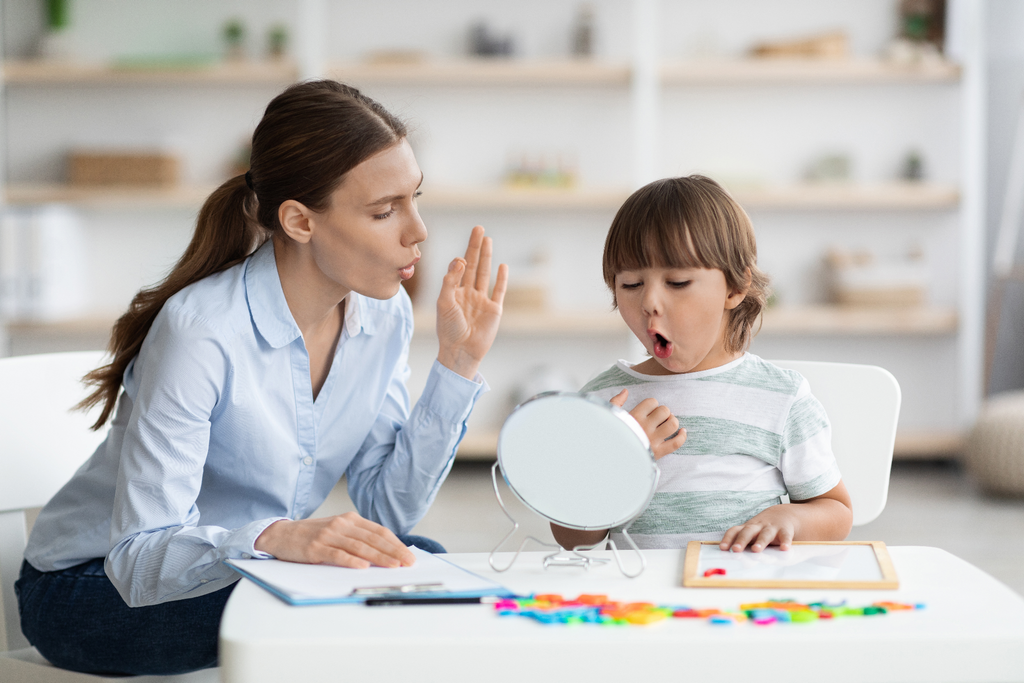
Communication plays an important role in a child’s learning, relationships, confidence, and everyday participation. Children develop speech and language skills at different rates, but persistent difficulties with speaking, understanding language, using words, or interacting with others may affect daily life.
Speech therapy can help children develop these skills through age-appropriate activities and structured practice. A speech-language professional first evaluates the child’s communication abilities and then creates an individualised plan based on their strengths and specific needs.
Speech therapy is not only about correcting pronunciation. It can address speech, language, social communication, fluency, voice, and certain feeding or swallowing difficulties depending on the child’s needs.
What Is Speech Therapy for Children?
Speech therapy is a specialised intervention designed to support children who have difficulties communicating clearly or understanding and using language. The therapist assesses how a child speaks, understands instructions, forms sentences, uses gestures, and communicates with others.
Areas Speech Therapy Can Address
Children may receive support for:
- Delayed speech development
- Difficulty understanding language
- Limited vocabulary
- Problems forming sentences
- Unclear pronunciation
- Stuttering
- Difficulty following instructions
- Social communication challenges
- Voice difficulties
- Communication associated with developmental conditions
The goals are based on the child’s age, abilities, communication environment, and individual challenges rather than following one standard program for every child.
How Speech Therapy Improves Communication
Speech therapy provides children with structured opportunities to practise communication skills in ways that are engaging and appropriate for their developmental level. Activities may involve games, pictures, books, toys, conversation, sounds, gestures, and everyday situations.
Building Vocabulary and Language
Some children understand more words than they can express, while others may have difficulty understanding what people say. Therapists can work on both expressive and receptive language skills.
Activities may focus on:
- Naming familiar objects
- Learning new words
- Combining words into sentences
- Understanding questions
- Following instructions
- Describing pictures
- Retelling simple stories
- Expressing needs and feelings
Regular practice can help children communicate their thoughts more effectively at home, school, and social settings.
Improving Speech Clarity
Some children know exactly what they want to say but are difficult to understand because they have trouble producing certain speech sounds. Speech therapy can identify specific sound patterns and help children practise clearer pronunciation.
Pronunciation and Sound Practice
A therapist may begin by helping the child recognise a sound before practising it in increasingly complex situations. For example, practice may progress from producing a sound individually to using it in words, sentences, and everyday conversations.
The approach depends on the child’s age and speech pattern. Not every speech difference requires therapy, so professional assessment is useful when concerns persist or communication is significantly affected.
Supporting Children Who Stutter
Stuttering can involve repetitions, prolongations, or pauses while speaking. Many children experience periods of disfluency during development, but persistent or distressing stuttering may require professional evaluation.
How Therapy Can Help
Speech therapy may help children understand their speech patterns, communicate more comfortably, and develop strategies appropriate to their needs. Parents are also often guided on how to respond supportively.
Creating a relaxed communication environment is important. Allowing the child enough time to finish speaking, maintaining eye contact, and avoiding interruptions can reduce unnecessary pressure during conversations.
Developing Social Communication Skills
Communication involves more than words. Children also need to understand facial expressions, gestures, conversational turns, tone, personal space, and how to adjust communication depending on the situation.
Learning to Interact With Others
Therapy may help children practise:
- Starting conversations
- Taking turns
- Responding to questions
- Maintaining appropriate attention
- Understanding simple social cues
- Asking for help
- Expressing emotions
- Participating in group activities
These skills can be particularly important for children who have difficulty interacting with peers or understanding social communication.
Speech Therapy for Children With Developmental Conditions
Some children with autism, developmental delays, neurological conditions, hearing difficulties, or other developmental concerns may experience communication challenges. Speech therapy can be one part of a broader support plan.
Individualised Communication Goals
The focus may be on spoken language, gestures, alternative communication methods, social interaction, or functional communication. For children who have limited speech, therapists may introduce alternative and augmentative communication methods when appropriate.
The objective is to help the child communicate effectively, whether through spoken words, gestures, pictures, communication boards, or electronic devices.
How Parents Can Support Progress at Home
Therapy sessions are only one part of a child’s communication development. Everyday interactions provide valuable opportunities for practising skills naturally without making communication feel like a formal lesson.
Simple Activities for Parents
Parents can support language development by:
- Talking about daily activities
- Reading books together
- Asking age-appropriate questions
- Giving children time to respond
- Expanding on what the child says
- Naming objects during everyday activities
- Encouraging children to describe experiences
- Singing songs and nursery rhymes
- Limiting pressure to speak perfectly
For example, if a child says, “car,” a parent might respond, “Yes, a red car is going fast.” This naturally models additional vocabulary without requiring the child to repeat it.
When Should a Child See a Speech Therapist?
There is no single age at which every child should begin speech therapy. However, parents should discuss concerns with a healthcare professional when communication difficulties persist, interfere with everyday activities, or appear significantly different from expected developmental patterns.
Signs That May Need Evaluation
Consider seeking an assessment if a child:
- Is difficult to understand compared with peers
- Has persistent pronunciation difficulties
- Uses very few words for their developmental stage
- Has difficulty understanding simple instructions
- Struggles to combine words appropriately
- Rarely communicates needs
- Frequently becomes frustrated when trying to communicate
- Has persistent stuttering
- Has difficulty participating in conversations
- Loses communication skills they previously had
An assessment does not automatically mean that a child needs long-term therapy. It helps determine whether support would be beneficial and what type of intervention may be appropriate.
Choosing the Right Speech Therapy Support
When selecting a speech therapist, parents should consider professional qualifications, experience with children, areas of specialisation, assessment methods, therapy approach, and communication with families.
Families in Chennai commonly look for the best speech therapist in Chennai based on the child’s specific communication needs, the therapist’s experience with similar concerns, accessibility, and the ability to involve parents in the therapy process.
Why Family Involvement Matters
Children often make better use of newly developed communication skills when parents and caregivers understand how to reinforce them at home. A therapist may provide practical activities and strategies that fit naturally into everyday routines.
Parents should also ask how progress will be measured and when therapy goals will be reviewed.
How Long Does Speech Therapy Take?
The duration of speech therapy varies considerably. Some children may need short-term support for a specific speech sound, while others may require longer-term intervention for language, developmental, or neurological difficulties.
Progress can depend on the child’s age, type and severity of communication difficulty, consistency of practice, underlying conditions, and participation in therapy.
Regular reassessment helps determine whether goals should be continued, modified, or gradually reduced as communication improves.
Conclusion
Speech therapy can help children develop clearer speech, stronger language skills, better understanding, and more effective social communication. It can also support children who experience stuttering, developmental communication difficulties, or challenges associated with certain medical or developmental conditions.
Early evaluation can be useful when communication concerns persist, particularly when difficulties affect learning, relationships, confidence, or everyday activities. With personalised therapy and support from parents and caregivers, children can practise communication skills in meaningful situations and gradually become more confident communicators.
Frequently Asked Questions
1. At what age can a child start speech therapy?
A child can receive speech therapy whenever a communication concern is identified. There is no universal minimum age. Early assessment can help determine whether a child’s speech or language development needs additional support.
2. How does speech therapy improve a child’s communication?
Speech therapy may improve vocabulary, sentence formation, pronunciation, understanding, conversation skills, and social communication. Therapists use structured, age-appropriate activities and encourage practice so children can apply new skills in everyday situations.
3. Can speech therapy help a child who does not speak?
Yes. Therapy can support children with limited or absent spoken language by developing functional communication. Depending on individual needs, this may include gestures, pictures, communication boards, electronic systems, and gradual development of spoken language.
4. How can parents support speech development at home?
Parents can support communication by talking frequently, reading together, giving children time to respond, modelling language, expanding their words, and encouraging conversations. Consistent, positive interactions can reinforce skills introduced during professional therapy sessions.
5. Does every child with delayed speech need speech therapy?
Not necessarily. Children develop communication skills at different rates, and some delays may resolve naturally. However, persistent concerns should be professionally assessed to determine whether therapy, monitoring, hearing evaluation, or another form of support is appropriate.