
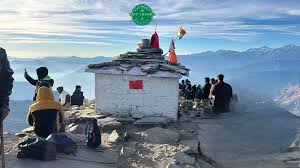

Last May, a friend of mine came back from Chopta and spent the better part of an hour just showing me photos on his phone. Not the usual tourist kind — not selfies in front of signboards or group shots at the trailhead. These were wide, quiet images of snow-dusted peaks catching the morning light, a stone temple sitting alone above the treeline, and a ridgeline so clean it looked like someone had drawn it. I made up my mind that night. This May, I was going.
And I did. Here is everything I know about the Tungnath trek — from planning it in Delhi to standing at Chandrashila Summit at sunrise — written for anyone who is thinking about the same thing.
Why Tungnath in May Specifically?
May is one of those months that works especially well for this particular trek, and here is why. The Tungnath temple opens for the season around late April — in 2026, the doors opened on 22nd April. So by May, the route is fully accessible, the rhododendrons on the lower section of the trail are still holding their colour, and the crowds have not yet hit their July peak. You get the best of the season without the worst of the footfall.
The weather is also genuinely pleasant at this time of year. Mornings at Chopta are cool and clear. The trail is dry, which matters more than people realise — a wet stone path going uphill at 3,500 metres is a very different experience from a dry one. Afternoons can get overcast, which is why most trekkers are advised to start early and be back at Chopta before 2 pm. That advice is worth taking seriously.
What Exactly Is Tungnath — And Why Does It Matter?
Tungnath is not just a trekking destination. It is the highest Shiva temple in the world, sitting at 3,680 metres above sea level in the Rudraprayag district of Uttarakhand. It is one of the five Panch Kedar shrines — the sacred Shiva temples of the Garhwal Himalayas — and its mythology runs deep into the Mahabharata. The Pandavas built these temples in penance after the Kurukshetra war, and Tungnath is where Lord Shiva’s arms are believed to have surfaced.
If you want a deeper understanding of the Panch Kedar circuit and how Tungnath fits into it spiritually and geographically, Panch Kedar’s best time to visit covers the full pilgrimage beautifully — the route, the temples, and what each one means. Worth reading before you go, even if you are trekking rather than doing the full yatra.
For many people, this is where the trek becomes something more than exercise. You arrive at the temple after two to three hours of uphill walking, slightly out of breath, and the stone shrine just sits there in the silence. No loud music, no vendors pushing souvenirs. The priests carry on with the morning rituals the same way they have for over a thousand years. It has a weight to it that is hard to explain in a travel article but very easy to feel when you are standing there.
The Route — Chopta to Tungnath to Chandrashila
The trek starts from Chopta, a tiny hamlet that most people drive through without realising it has a name. It sits at 2,680 metres and is sometimes called the Mini Switzerland of Uttarakhand — a nickname it has earned through the combination of green meadows, dense deodar forest, and unobstructed Himalayan views that surround it.
From the Chopta trailhead, the path to Tungnath temple is 3.5 kilometres one way. The trail is stone-paved for most of its length, which makes it more manageable than loose gravel or mud routes but also harder on the knees on the way back. Give yourself two to three hours going up if you are doing this for the first time. The trail passes through rhododendron forest in the lower section, opens into alpine meadows higher up, and then arrives at the temple. There are small dhabas along the way where you can stop for chai and Maggi — do not skip them. They are part of the experience.
Once you are at the temple, most people continue another 1.5 kilometres to Chandrashila Summit at 4,000 metres. This last section is steeper and more exposed, but the view from the top is the reason everyone who has done this trek tells other people to do it. On a clear morning, you can see Nanda Devi, Trishul, Chaukhamba, Kedar Peak, and several other major Himalayan summits laid out across the horizon in a full 360-degree arc. There is a small temple at the summit. Most people sit there for longer than they planned to.
The total round trip from Chopta to Chandrashila and back is around 10 kilometres. Budget a full day — start by 7 am, be at the summit by 11, and back at Chopta by 2 pm.
How to Get to Chopta from Delhi
This is where most people get confused, and rightfully so — Chopta does not have direct buses or trains.
The standard route is Delhi to Haridwar or Rishikesh, either by overnight train or bus. From Rishikesh, you take a private taxi or shared cab to Chopta via Devprayag, Srinagar (Garhwal), Rudraprayag, and Ukhimath. The road distance from Rishikesh to Chopta is approximately 200 kilometres and takes 7 to 8 hours depending on traffic and road conditions. The drive itself is genuinely scenic — the Alaknanda river runs alongside the highway for much of the route, and the Garhwal villages along the way are worth slowing down for.
If you are flying, the nearest airport is Jolly Grant in Dehradun. From there to Rishikesh is about 14 kilometres by road, and then the same Chopta route applies.
One important note: there are two places called Chopta in this region. One is a small village near Rudraprayag and the other is the actual base camp for the Tungnath trek, which comes after Agastyamuni and Ukhimath. Make sure your driver is taking you to the right one — the Ukhimath-Chopta route is what you want.
Where to Stay in Chopta
Accommodation options in Chopta are basic and that is perfectly fine. There are small guesthouses, homestays, and tent camps spread along the road. Most have hot water, basic meals, and enough warmth to sleep comfortably after a long day of trekking. Do not arrive expecting hotel amenities — you will be fine but adjust your expectations before you get there.
The tent camps are genuinely worth considering. Sleeping in a camp at 2,680 metres with no light pollution means a sky full of stars that you probably have not seen since the last time you were this far from a city. Several travellers I spoke to said the night sky at Chopta was one of their strongest memories from the entire trip — not the temple, not the summit, but lying in a sleeping bag looking up through a mesh tent ceiling.
Book accommodation in advance if you are travelling in May. The number of rooms and camps is limited, and weekends fill up. Carry enough cash because ATMs are not available in Chopta — the last one is in Ukhimath, roughly 20 kilometres away.
What to Pack — The Honest List
People either overpack or underpack for Tungnath, and both create problems. Here is what actually matters:
- Footwear: Proper trekking shoes with ankle support and grip. The stone path is uneven in places and slippery if there has been rain or early morning frost. Regular sports shoes will get you there but you will be working harder than you need to.
- Layers: Even in May, mornings at Chopta are cold — sometimes 5 to 8 degrees Celsius. At Chandrashila, wind chill can drop it further. Carry a fleece layer and a windproof outer shell. You will take them off once you are moving but you will need them at the top.
- Water: Carry at least 1.5 litres from Chopta. At altitude, hydration matters more than it seems — it is one of the best ways to avoid altitude sickness.
- Sunscreen and sunglasses: UV exposure at 3,500+ metres is significant and the reflective light off snow patches makes it worse. People skip sunscreen on mountain treks and regret it.
- ID proof and cash: Carry a government-issued ID and a few hundred rupees for the forest entry fee at the trailhead. No trekking permit is required.
- Basic medicines: A first aid kit, paracetamol, and if you are prone to motion sickness, something for the long mountain drive. Check with your doctor about altitude-related precautions if you have any history.
Things You Should Know Before the Trek
Non-vegetarian food and alcohol are not allowed on the trail or near the temple. This is a religious site and the rule is taken seriously. Leave these at the base.
The mobile network works reasonably well in Chopta but weakens significantly on the upper trail and disappears at the summit. Download offline maps of the route before you start.
Photography is generally allowed on the trail and at the summit. Inside the temple sanctum, it may not be — follow the priest’s instructions. Remove shoes before entering the inner area of the temple.
Altitude sickness can affect anyone, regardless of fitness. Spending at least one night in Chopta before the trek and ascending slowly are the two most effective preventive measures. If you experience a severe headache, vomiting, or confusion, descend immediately.
How Adotrip Can Help You Plan This Trip
If you are not the type who wants to piece together a Himalayan trip from scratch — finding your own driver, calling multiple guesthouses, figuring out the route — then using a structured platform makes sense. Adotrip covers Uttarakhand extensively and has curated packages that include transport, accommodation, and guides for the Tungnath circuit. Their Uttarakhand travel guide is a solid starting point if you want to understand the broader landscape of what the state has to offer beyond just Chopta — whether that is extending your trip to Deoriatal, planning a side visit to Kedarnath, or building out a longer Garhwal itinerary.
For first-time Himalayan trekkers especially, the value of a properly organised package is not just convenience — it is the peace of mind that comes with having someone on the ground who knows what to do if the weather changes, if a road is blocked, or if someone in your group needs to come back early.
Is It Worth It?
Yes. Without reservation.
Tungnath is one of those places that manages to be genuinely accessible without feeling like it has been domesticated. The trail is manageable for most reasonably fit people. The temple is real, old, and carries a presence that is different from a tourist attraction. The views from Chandrashila are among the best you can get without technical climbing in India. And the drive to get there — through the Garhwal valleys, along rivers, past old stone villages — is part of the experience in a way that a flight somewhere never is.