
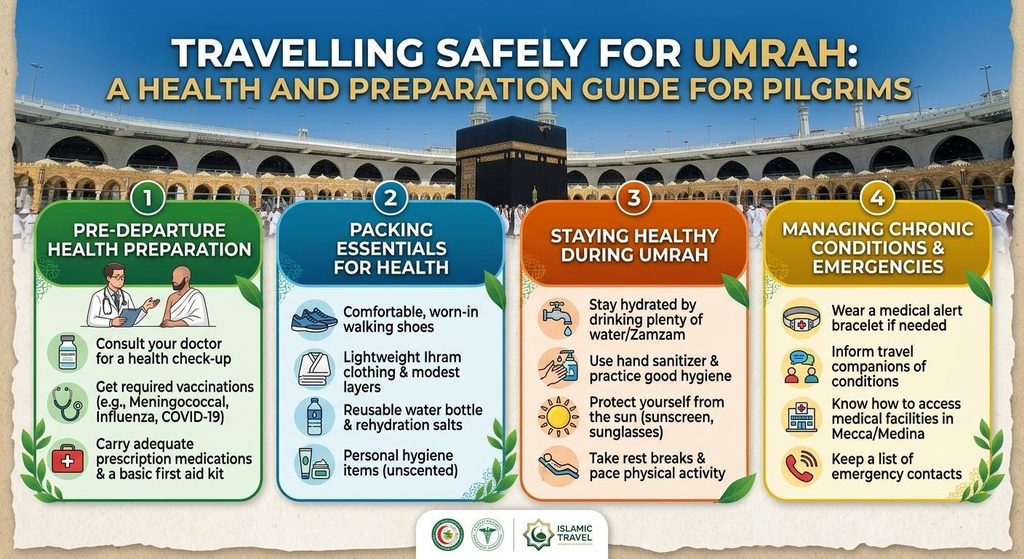
A pilgrimage is a journey of the heart, but it is still a journey, and like any international trip it rewards careful preparation. Every year, large numbers of British Muslims travel to Makkah and Madinah, and the vast majority return home safe, healthy and spiritually renewed. Those who have the smoothest experience are almost always the ones who prepared sensibly: sorting their documents early, taking simple health precautions, and choosing a well-organised trip. This guide sets out how to travel safely and comfortably for Umrah.
This guide covers the practical side of a safe pilgrimage: health precautions, staying safe in the crowds, and protecting your documents and money.
The foundation of a safe trip is a well-organised one. When arrangements are chaotic, small problems multiply; when they are handled properly, the journey is calm and secure. Travellers comparing all-inclusive umrah packages benefit from having flights, the pilgrimage visa, hotels close to the holy sites and transfers all arranged and confirmed in advance, which removes much of the uncertainty that can lead to stress or risk on the ground. A reputable, protected agency is your first and best safety measure.
Health precautions before you travel
Saudi Arabia sets health requirements for pilgrims, and these can change from year to year. Certain vaccinations, such as the meningitis vaccine, are commonly required, and proof may be requested on arrival. Because the rules are updated periodically, check the current requirements well in advance through your agency or a travel health clinic, and arrange any vaccinations in good time rather than in the final week.
It is also wise to prepare for the everyday health realities of the trip. The climate can be hot, the days long, and the holy sites very busy, so staying hydrated, pacing yourself and carrying any regular medication in your hand luggage all matter. A small personal first-aid kit and comfortable, well-worn footwear help prevent the minor ailments, such as blisters and dehydration, that most commonly affect pilgrims.
Staying safe in the crowds
The holy sites draw enormous numbers of worshippers, particularly around prayer times, and moving safely through crowds is an important skill. Agree a simple plan with your family in case anyone becomes separated, such as a fixed meeting point and a note of your hotel details carried on each person. Keep valuables secure and to a minimum, and be patient rather than rushing, especially during the busiest periods.
Timing affects how crowded your trip will be. The last ten nights of Ramadan, for instance, are the busiest of the entire year, and pilgrims choosing Last 10 Nights Ramadan Umrah Packages should prepare especially carefully for the density of the crowds, prioritising a hotel very close to the holy sites and building plenty of rest into their days. A trusted agency such as Qiblatain UK can advise on how to manage the busiest periods safely and comfortably.
Whatever the season, knowing what to expect helps you stay calm and safe. Older pilgrims and families with young children should take extra care, choosing quieter times for the rites where possible and never pushing beyond their comfort in the heat and the crowds. Patience, here, is both a safety measure and a form of worship.
Protecting your documents and money
Practical security matters on any trip. Keep your passport, visa and travel documents safe, and carry copies separately from the originals in case anything is lost. Many pilgrims use the hotel safe for valuables and carry only what they need each day. A little care here prevents the most common travel setbacks, which are administrative rather than dramatic.
It is also sensible to have a way to reach your agency or a UK contact if something goes wrong. Confirm before you travel that the agency is ATOL protected, which safeguards your money and your journey if a supplier fails, and that you can reach a real person for help. This reassurance is part of what makes a well-organised trip feel secure from start to finish.
A quick safe-travel checklist
Keep this short list to hand as you prepare for a safe Umrah:
- Check and arrange the current vaccination requirements well in advance.
- Carry regular medication in your hand luggage, with a small first-aid kit.
- Agree a family meeting point and carry your hotel details in the crowds.
- Prioritise a hotel close to the holy sites, especially in busy seasons.
- Keep copies of your documents separate from the originals.
- Confirm the agency is ATOL protected and reachable before you travel.
Frequently asked questions
What vaccinations do I need for Umrah?
Saudi Arabia sets health requirements that can change yearly, and certain vaccinations, such as the meningitis vaccine, are commonly required. Always check the current requirements well before travelling and arrange any vaccinations in good time through a travel health clinic or your GP.
How do I stay safe in the crowds at the holy sites?
Agree a family meeting point, carry your hotel details, keep valuables minimal and secure, and be patient rather than rushing. Choosing a hotel close to the holy sites and quieter times for the rites, where possible, also helps, especially for families and older pilgrims.
Is the last ten nights of Ramadan safe to travel?
It is deeply rewarding but extremely busy, being the most crowded period of the year. With careful preparation, a hotel very close to the holy sites, plenty of rest and realistic expectations, it can be managed safely and comfortably.
How can I protect my documents and money?
Keep originals secure, carry copies separately, use the hotel safe for valuables, and carry only what you need each day. Confirm your agency is ATOL protected and reachable, so you have support if anything goes wrong.
Final thoughts
Travelling safely for Umrah is mostly a matter of sensible, early preparation. Sort your health requirements and documents in good time, take simple precautions in the crowds, and choose a well-organised, protected trip so the practical side is secure. Do that, and you remove almost every avoidable risk before it can arise, leaving you free to focus on the true purpose of the journey: worship, reflection and drawing closer to Allah in the holiest places on earth.